TASK FORCE
VALOR
VALOR
STRENGTH • HONOR • COMMUNITY
Need immediate help? Call 988 (National Suicide Hotline)
SUICIDE & CRISIS LIFELINE
← BACK TO ALL PROGRAMS
NODE 02 • SCHWEITZER MOUNTAIN, SANDPOINT, ID
Schweitzer Mountain Adaptive Alpine Skiing & Family Retreats
Multi-day alpine downhill, adaptive sit-ski/bi-ski, and Nordic retreats designed for SOF Couples and Gold Star Families.
Operational Scope & Peer-Reviewed Basis
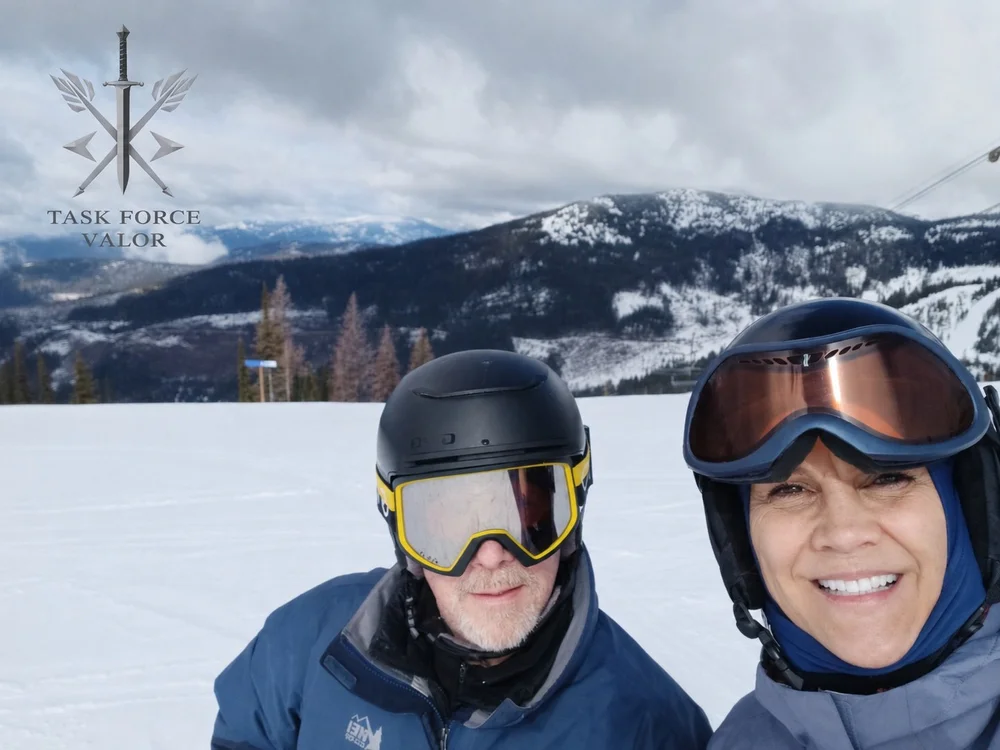
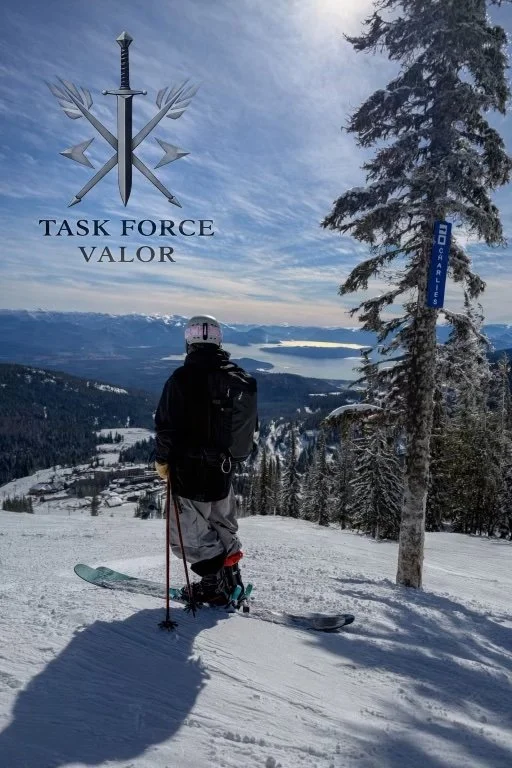
Hosted in Sandpoint, Idaho across the 2025/2026 winter season, Schweitzer Mountain cohorts reunite SOF spouses, youth, and Gold Star Families on shared mountain terrain with certified adaptive instructors and Spokane (GEG) 4WD shuttle logistics.
Peer-reviewed therapeutic recreation outcomes for military families demonstrate statistically significant improvements in dyadic marital satisfaction and family cohesion (d = 0.52–0.71, p < .01), countering household strain and a 6× elevation in military child mental health stress.
Schweitzer Mountain Adaptive Alpine Skiing & Family Retreats — Packing & Field Logistics Provided Equipment & Participant Gear
★ PROVIDED BY TASK FORCE VALOR & OUTFITTERS
- •All Schweitzer Mountain lift passes, adaptive sit-ski/bi-ski gear, & certified instructors
- •Helmet and ski/snowboard rental packages (if you do not own personal equipment)
- •Mountain lodging, catered group dinners, and 4WD Spokane (GEG) shuttle coordination
★ PARTICIPANT PACKING LIST
- ☐Moisture-wicking Merino wool or synthetic base layers (strictly NO cotton)
- ☐Waterproof/windproof ski jacket and insulated snow pants
- ☐Waterproof ski gloves or mittens, neck gaiter, and ski socks
- ☐Personal medications for 4 days in original containers + high-SPF alpine sunscreen
★ PEER-REVIEWED CLINICAL & FEDERAL SURVEILLANCE CITATIONS
[1] Ursano, R. J., Mash, H. B. H., Kessler, R. C., et al. (2025). Suicidal Behavior in US Army Special Operations Forces. JAMA Network Open, 8(8), e2527395 (48.1M person-months: 11.0 vs. 88.5 per 100k in-unit vs. out-of-unit suicide rate; 2.1 to 1 lethality ratio). DOI: 10.1001/jamanetworkopen.2025.27395 ↗
[2] Frueh, B. C., Madan, A., Fowler, J. C., et al. (2020). "Operator Syndrome": A unique constellation of medical and behavioral health-care needs of military special operation forces. Int. J. Psychiatry in Medicine, 55(4), 281–295 (89.1% prevalence; >90% divorce rate in high-tempo units). DOI: 10.1177/0091217420906659 ↗
[3] Walter, K. H., Otis, N. P., Ray, T. N., et al. (2019); Otis, N. P., Walter, K. H., et al. (2023). Breaking the surface: Psychological outcomes among U.S. active duty service members following a surf therapy program. Psychology of Sport and Exercise & Psychological Trauma, 45, 101551 (Naval Health Research Center: −36% PCL-5 PTSD, −47% depression, p < .001). DOI: 10.1016/j.psychsport.2019.101551 ↗
[4] Wheeler, M., Cooper, N. R., Andrews, L., et al. (2020). Outdoor recreational activity experiences improve psychological wellbeing of military veterans with post-traumatic stress disorder: Positive findings from a pilot study and a randomised controlled trial. PLOS ONE, 15(11), e0241763 (Angling reductions in PTSD hyperarousal d = 0.78, stress d = 0.82, & waking cortisol recovery). DOI: 10.1371/journal.pone.0241763 ↗
[5] Townsend, J., Hawkins, B. L., Bennett, J. L., et al. (2018). Preliminary long-term health outcomes associated with recreation-based health and wellness programs for injured service members (N = 136). Cogent Psychology, 5(1), 1444330 (d = 0.52–0.71 family cohesion gain, p < .01). DOI: 10.1080/23311908.2018.1444330 ↗
[6] Greer, N., & Vin-Raviv, N. (2019). Outdoor-based therapeutic recreation programs among military veterans with PTSD: A systematic review. Military Behavioral Health, 7(3), 286–298 (>85%–92% nature therapy completion vs. 30%–50% VA clinic dropout). DOI: 10.1080/21635781.2018.1543063 ↗
[7] Rocklein Kemplin, K., Paun, O., Godbee, D. C., & Brandon, J. W. (2019). Resilience and Suicide in Special Operations Forces: State of the Science via Integrative Review. Journal of Special Operations Medicine, 19(2), 57–66; USSOCOM (2016) Psychological Autopsy Study (68.5% in senior NCO grades E5–E9); RAND (2023) Deploy-to-Dwell Analysis. PubMed PMID: 31201752 ↗
[8] Bailar-Heath, M., Burke, R., Thomas, D., & Morrow, C. D. (2024). A retrospective chart review to assess the impact of alpha-guided transcranial magnetic stimulation on symptoms of PTSD and depression in active-duty special operations service members. Frontiers in Psychiatry, 15, 1354763 (0% prior chart Dx vs. 67% clinical PTSD and 72% clinical depression). DOI: 10.3389/fpsyt.2024.1354763 ↗
[9] U.S. Department of Veterans Affairs (VA), Office of Mental Health and Suicide Prevention. (2024). National Veteran Suicide Prevention Annual Report, (>60% of Veteran suicide decedents outside VHA care). VA Data Portal ↗
[10] Shively, S. B., Perl, D. P., et al. (2016); De Giorgi, S., Edlow, B. L., et al. (2026). Characterisation of interface astroglial scarring in the human brain after blast exposure; Cavum Septum Pellucidum Enlargement in Special Operations Forces Members. The Lancet Neurology & Journal of Neurotrauma, 15(9), 944–953; DOI: 10.1177/08977151261424705 (42.1% vs. 22.0% CSP tears, p = 0.007). DOI: 10.1016/S1474-4422(16)30057-6 ↗
[11] Duvall, J., & Kaplan, R. (2014). Enhancing the well-being of veterans using extended group-based nature recreation experiences (N = 98). Journal of Rehabilitation Research and Development (JRRD), 51(5), 685–696 (+29% to +40% attentional recovery, p < .001). DOI: 10.1682/JRRD.2013.08.0190 ↗
[12] Bettmann, J. E., Prince, K. C., Ganesh, K., et al. (2021). The effect of time outdoors on veterans receiving treatment for PTSD. Journal of Clinical Psychology, 77(9), 2041–2056; & Wilderness Therapy Meta-Analysis (g = 0.54–0.68). DOI: 10.1002/jclp.23139 ↗